
Free water testing Holly, MI (810) 254-0515
Water Softener Salt Refill Service in Holly

Holly Local

5.0 from 2 Google reviews

Water Softener Salt Refill Service in Holly

Professional salt refills and softener checks from a 35-year Southeast Michigan water treatment specialist.

Call or text (810) 254-0515

Request an estimate

Tell us what you need
No obligation


By submitting this form you agree that we may contact you about your request and share your name and email address with partner companies for email marketing. We never share your mobile number or text message consent with third parties or affiliates for marketing or promotional purposes.

Water treatment system monitoring and inspection with digital meters on a residential water softener installation in a utility room.

Salt Refill Service for Holly-Area Softeners

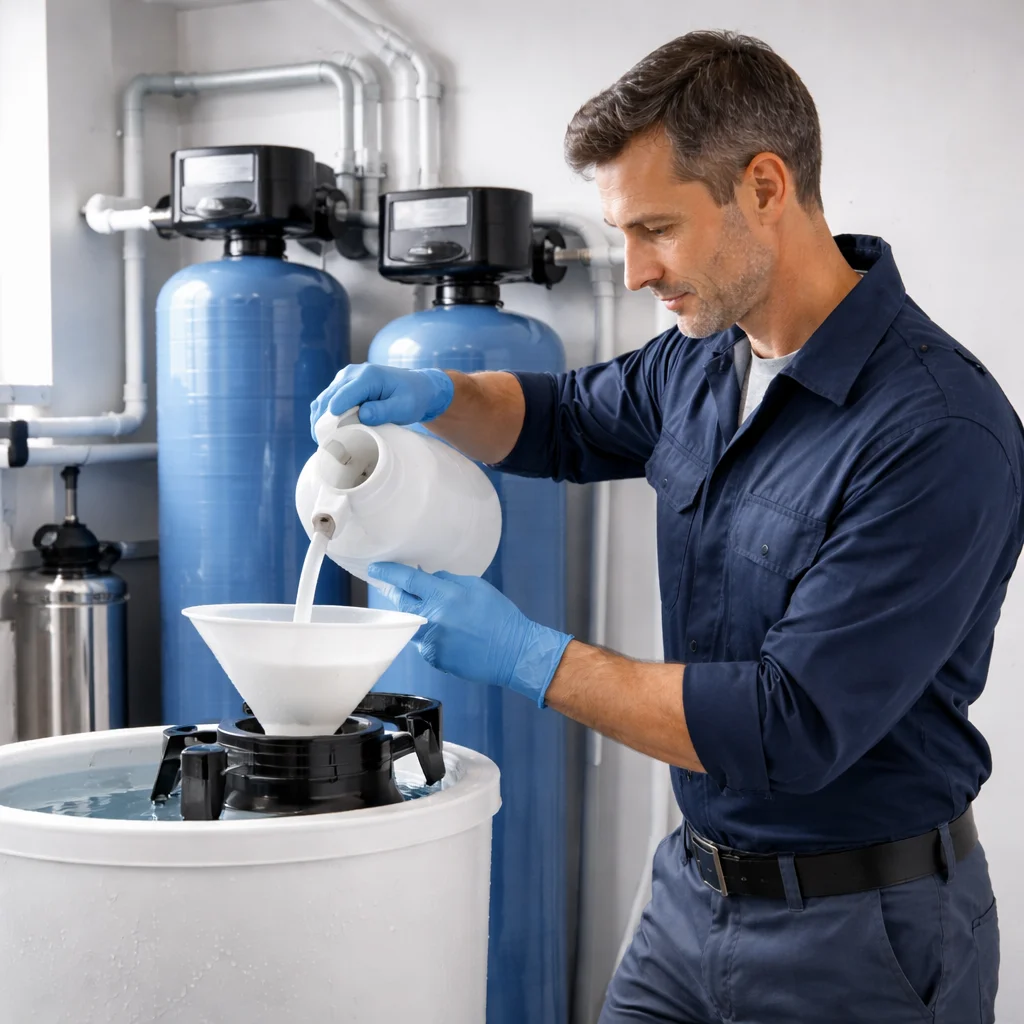
Water softener salt refill service in Holly is exactly what it sounds like: Robert Davidson comes out, checks your brine tank, adds the right salt for your specific system, and verifies the softener is actually doing its job before he leaves. Mr. Water Treatment LLC has handled this for homeowners across Holly and Southeast Michigan for over 35 years. If your water has started feeling different, your soap isn't lathering the way it used to, or you just can't remember the last time the tank was topped off, that's your sign. Call (810) 254-0515 and we'll take it from there.

Salt consumption in this part of Michigan runs higher than most homeowners expect. Oakland County well water is genuinely hard, and a softener working against those mineral loads cycles through salt faster than the owner's manual tends to suggest. Getting the wrong salt type for your control valve, overfilling the tank, or letting salt bridge form at the top are all mistakes that quietly cut into your system's performance. A proper refill visit covers more than just dumping in a bag: we check the brine tank for mush and bridging, confirm the regeneration cycle settings, and troubleshoot any softener issues that show up during the inspection. Every job is different. Contact Mr. Water Treatment LLC for an accurate estimate.

What a Salt Refill Visit Covers

Here's what actually happens when we come out for a salt refill in Holly:
  • Check current salt level and brine tank condition
  • Break up any salt bridges or mush buildup before adding new salt
  • Match the correct salt type to your softener model and control valve
  • Verify regeneration frequency and cycle settings
  • Test outgoing water hardness to confirm the system is working
  • Flag any wear or performance issues before they become failures
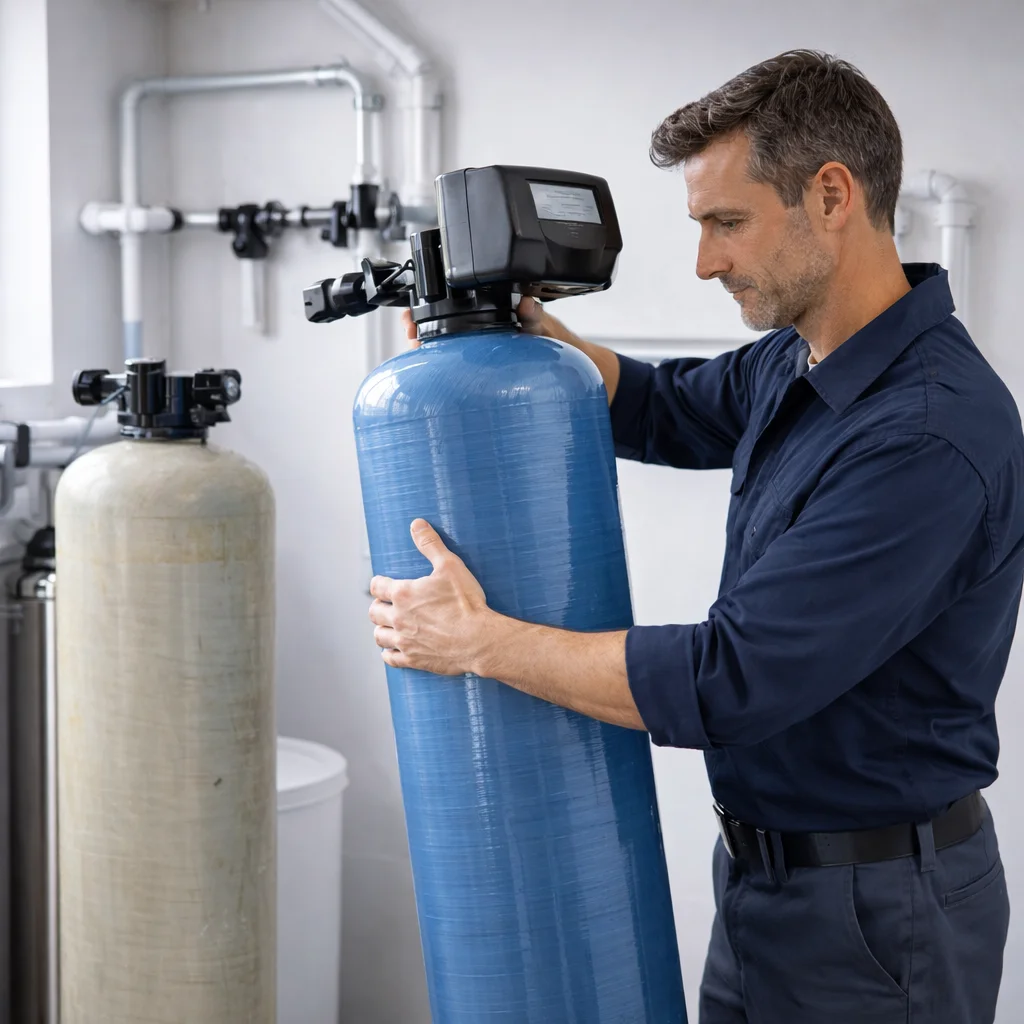
Water softener system installation with blue resin tank and control valve being inspected by a technician in a residential utility space.

Salt Selection

Which Salt Type Is Right for Your Softener

Not all salt is the same, and the wrong choice can gum up your brine tank faster than the hard water itself.

Pellet Salt

The most common choice for residential softeners. Pellets dissolve cleanly, leave minimal residue, and work well in most standard brine tanks. We use pellets on the majority of Holly-area installs.

Solar Salt

Higher purity than rock salt, slightly lower cost than pellets. Works well in tanks that are cleaned regularly. Can leave slightly more residue over time in heavily used systems.

Rock Salt

Lowest upfront cost, but higher insoluble content means more tank sediment over time. We rarely recommend it for residential softeners in this area unless the tank is cleaned frequently.

Potassium Chloride

An alternative for households that want to reduce sodium in their water. Works in most softeners but requires more frequent regeneration cycles. Costs more per pound than any of the sodium-based salts.

Local Conditions

How Holly's Water Hardness Affects Salt Use
Hard water is the norm in Oakland County, not the exception. Depending on whether your home is on a well or municipal supply, hardness levels in the Holly area can run high enough that your softener is regenerating several times per week. That burns through salt fast. In winter, usage patterns shift too: longer showers, more time indoors, and cold inlet water that makes the softener work harder all push consumption up. A softener sized for average use can run low faster than expected during a Michigan January. If you're on a well, water mineral content testing before the refill visit lets us dial in the softener's settings more precisely. A system regenerating on a timer set for average municipal hardness will waste salt and water if your well actually tests harder. That's one reason we don't just refill and leave: we check the numbers. It's the same approach we use on every residential water softener setup we install.
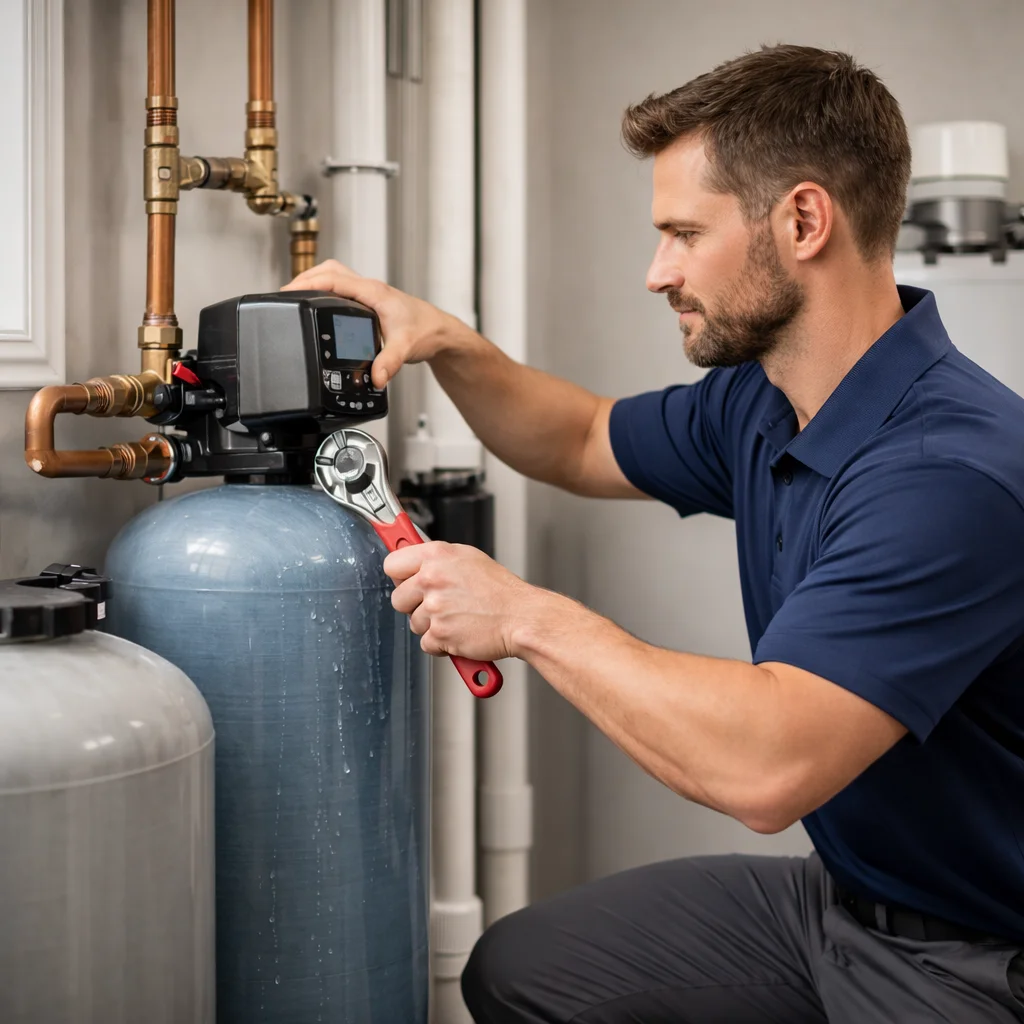
Water softening system installation and maintenance being inspected by a technician in a residential utility space.

Signs Your Brine Tank Needs Attention Now

Any one of these means it's time to call, not wait until your next scheduled visit.

Water Feels Hard Again

Soap won't lather, skin feels dry after a shower, or dishes come out of the dishwasher with spots. These are the clearest signals your softener isn't working, often because the brine tank ran dry.

Salt Level Looks the Same for Weeks

Salt that isn't dropping means the system isn't regenerating. That's not good news. It usually points to a salt bridge: a hardened crust has formed above the actual salt level, and the softener thinks the tank is full when it isn't.

Wet or Mushy Salt at the Bottom

Salt mush at the bottom of the brine tank blocks the pickup tube and prevents proper brine from forming. The fix isn't just adding more salt on top. The mush has to come out first.

It's Been More Than 3 Months

Even if everything looks fine from the outside, an inspection every 3 months on a heavily used system makes sense. Problems that are caught early are cheaper and easier to fix than the ones we find after a failure.

What Happens If You Run Out of Salt
Running out of salt doesn't immediately break your softener. What it does is let hard water pass straight through the resin tank without being treated. Over time, that hard water re-coats the resin beads with calcium and magnesium. The resin doesn't fail overnight, but a prolonged salt-out condition shortens resin life and reduces system efficiency even after you refill. Beyond the softener itself, untreated hard water is hard on everything downstream: water heaters, faucet aerators, appliance connections, and your plumbing. We've seen scale buildup accelerate significantly in homes that went months without catching a depleted brine tank. A filter replacement service visit can address downstream effects, but it's easier and cheaper to stay ahead of them. If you're not sure how often your tank needs attention, that's exactly what a system needs analysis is for.
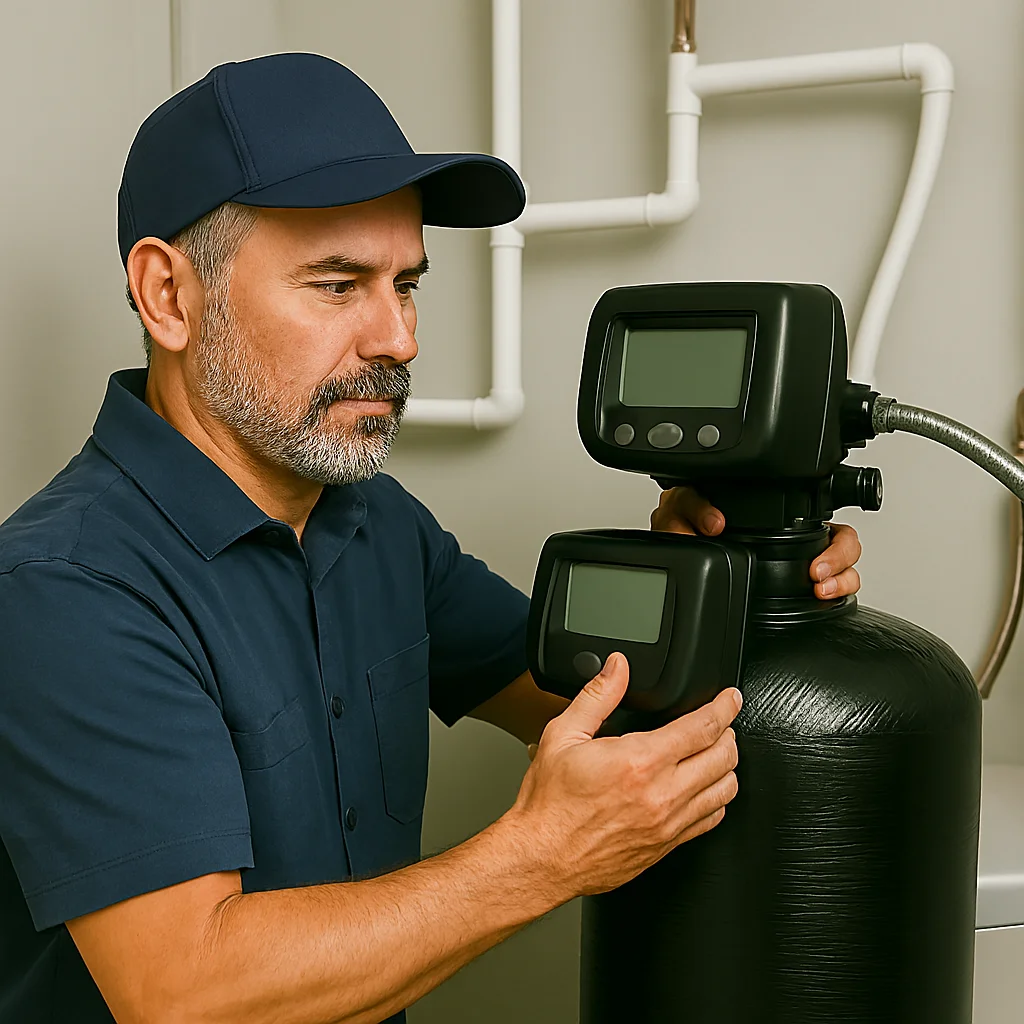
Technician inspecting water softener system controls during a maintenance visit

Why Homeowners in Holly Call Robert

35 years in this trade. No subcontractors. The person who picks up the phone is the person who shows up.

Factory-direct pricing
No retail markup on salt or components. You pay for the work, not the brand name on the bag.
Authorized Charger Dealer
Certified to service and optimize the control valves used in many Southeast Michigan softener installs.
BBB Accredited
Accredited with the Better Business Bureau, with a 5-star rating across Google reviews.
Test before and after
We check hardness going out of the softener before we leave. If the numbers aren't right, we fix it.

Common Questions About Salt Refill Service

Don't see your question?(810) 254-0515
How often should I refill my water softener salt in Holly?
For most households in the Holly area, checking the brine tank monthly is a good habit. How fast you go through salt depends on your household size, your softener's capacity, and how hard your water tests. On a well with high hardness, some systems need a refill every 4 to 6 weeks. On treated municipal water, you might stretch to 8 weeks. The only way to know for sure is to check the tank and test the water hardness coming out of the system.
What type of salt does my water softener need?
Most residential softeners in this area run well on high-purity pellet salt. It dissolves cleanly and leaves the least residue in the brine tank over time. Rock salt is cheaper upfront but introduces more insoluble sediment that can cause mush buildup and block the pickup tube. If you're unsure what your specific unit calls for, we can check the control valve specs on-site and confirm the right type before we refill.
What happens if my water softener runs out of salt?
Hard, untreated water bypasses the softener and flows straight through the system. In the short term, you'll notice it in your water quality: soapy films, spots on dishes, dry skin. Over weeks and months, that hard water slowly coats the resin beads and reduces your softener's effectiveness even after you add salt back. Catching a low tank early is worth the effort.
Can I refill my water softener salt myself?
You can add salt to the brine tank yourself, and for a tank that's just running low with no other issues, that's fine. Where homeowners run into trouble is not catching salt bridges, leaving mush at the bottom of the tank, or using the wrong salt type for their system. A professional visit every few refills lets us inspect the tank, check the settings, and test the output water to confirm everything's actually working the way it should.
How do I know when my water softener needs salt?
The most obvious sign is water that starts feeling hard again: poor lather, spotty glasses, dry skin after a shower. Inside the tank, the salt level should sit above the waterline. If the level looks the same week after week, you may have a salt bridge, which is a hardened crust that makes the tank look full while the water underneath has no active salt. Tapping the side of the tank and listening for a hollow sound below the crust is a quick at-home check.
How long does a bag of salt last in a water softener?
A 40-pound bag might last one household six weeks and another two weeks, depending entirely on water hardness and water use. In Holly's harder water zones, especially on well water, consumption runs on the higher end. Softeners that are set to regenerate too frequently also burn through salt faster than necessary, which is why confirming your regeneration cycle settings during a service visit matters.
Is softened water safe to drink?
For most people, yes. Softened water has sodium added during the ion exchange process, but the amount is small enough that it falls well within safe drinking limits for healthy adults. Households with specific sodium restrictions sometimes run a separate reverse osmosis system for their drinking water tap, which removes the sodium along with other dissolved solids. That's a decision worth making based on your actual water test results, not a general assumption.
How long does 40 pounds of salt last in a water softener?
It depends entirely on water hardness and household water use. In Holly's harder water zones, especially on well water, 40 pounds might last three to five weeks in an average household. Softeners set to regenerate more frequently than needed also burn through salt faster, which is why reviewing your cycle settings during a service visit is worthwhile.

Ready to Schedule a Salt Refill?

Call Robert at Mr. Water Treatment LLC and get your softener checked by someone who's been doing this in Southeast Michigan for over 35 years.

Related

Next step

Tell us about the job

Your name, your number and what needs doing. A person from Mr. Water Treatment LLC gets back to you.

Rather talk now?(810) 254-0515

No obligation


By submitting this form you agree that we may contact you about your request and share your name and email address with partner companies for email marketing. We never share your mobile number or text message consent with third parties or affiliates for marketing or promotional purposes.