
Holly Local
5.0 from 2 Google reviewsReverse Osmosis Performance Testing in Holly
Objective pressure, flow, and filter testing that tells you exactly what your RO system is delivering.
Call or text (810) 254-0515Request an estimate
Tell us what you need
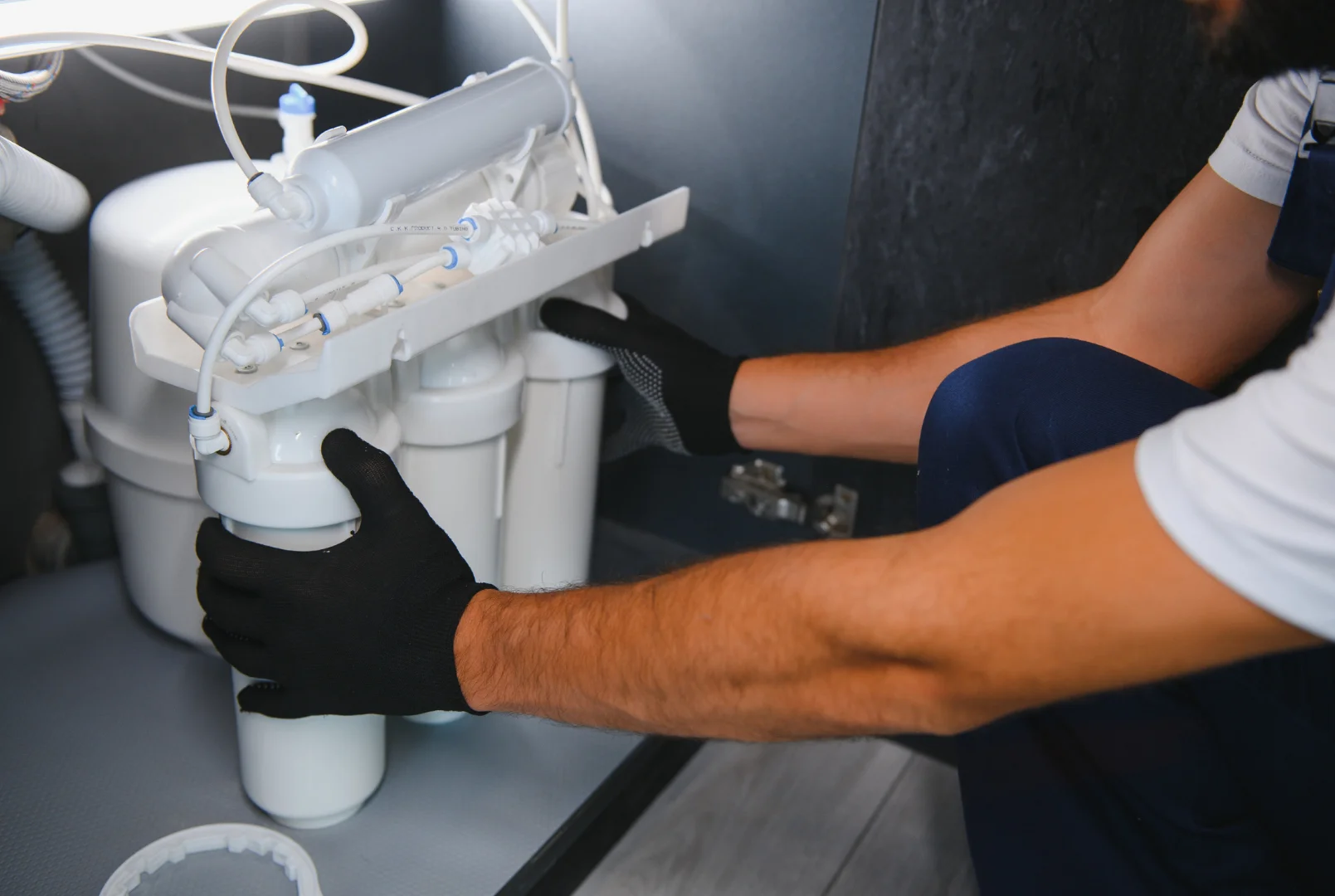
RO Performance Testing in Holly, MI
Mr. Water Treatment LLC performs reverse osmosis performance testing in Holly, MI for homeowners and commercial customers across Southeast Michigan. If you're not sure whether your RO system is still filtering at the level it was installed to deliver, that's exactly the question this service answers. Robert Davidson has been diagnosing RO systems for over 35 years, and the evaluation covers step-by-step water sampling, pressure and flow measurement, and a hands-on review of every filter component. Call (810) 254-0515 and get a clear answer, not a guess.
What drives the scope of a performance test is the system itself: age of membranes and filters, the incoming water chemistry, whether the system feeds a single under-sink tap or a whole building, and how long it's been since the last service call. A residential under-sink RO unit and a commercial reverse osmosis installation each get the same methodical approach, but the number of filter stages, the pressure thresholds we're testing against, and the time on-site will differ. Every job is different. Contact Mr. Water Treatment LLC for an accurate estimate.
What Reverse Osmosis Performance Testing Covers
- Step-by-step water sampling before and after the membrane
- Pressure and flow measurement at each stage of the system
- Visual and functional inspection of all filter components
- TDS and water quality readings compared against baseline
- Written findings with honest recommendations: tune-up or replacement
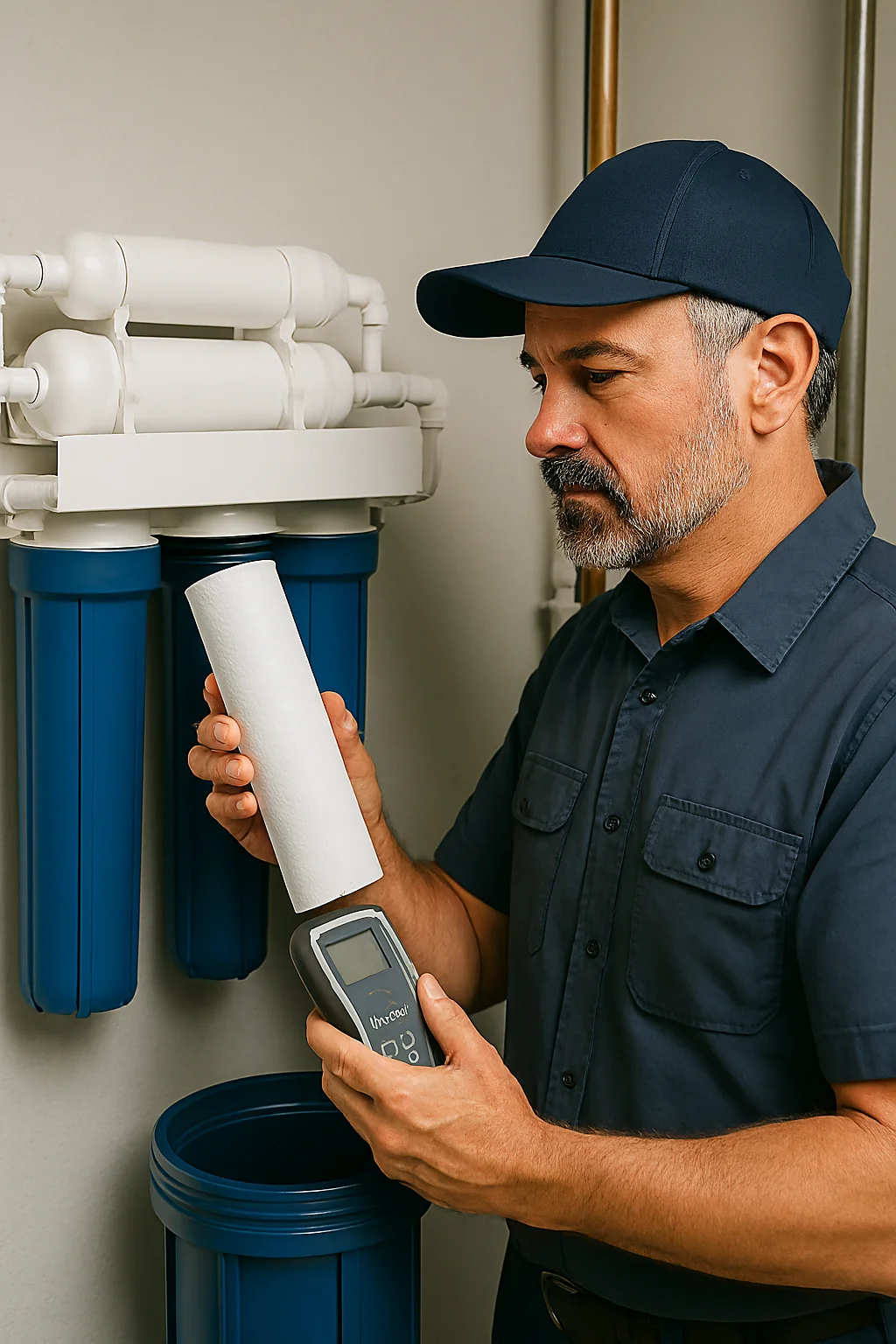
The Process
How We Test Your RO System
Measurement first, recommendations second. That's how we keep it honest.
What We Check
Six Indicators That Tell Us If Your RO Is Working
Any one of these failing can compromise the whole system's output.
Membrane Output
The membrane is the core of any RO system. We measure rejection rate directly, a healthy membrane rejects 90-95% of dissolved solids. Below that threshold, the membrane needs attention.
Feed Water Pressure
RO systems require adequate incoming pressure to push water through the membrane efficiently. Low pressure means slow flow, poor rejection, and a tank that never fills to capacity.
Pre-Filter Condition
Sediment and carbon pre-filters protect the membrane. A clogged pre-filter starves the membrane of pressure and can shorten membrane life significantly, we pull and inspect each one.
Storage Tank Pressure
The holding tank relies on a pressurized bladder. When that bladder fails, the tank fills with water instead of air, and your tap flow drops to a trickle. We check tank pressure with every visit.
Post-Filter and Polish Stage
The final carbon filter removes residual taste and odor before water reaches the tap. An exhausted post-filter is easy to miss but noticeably affects the water you drink every day.
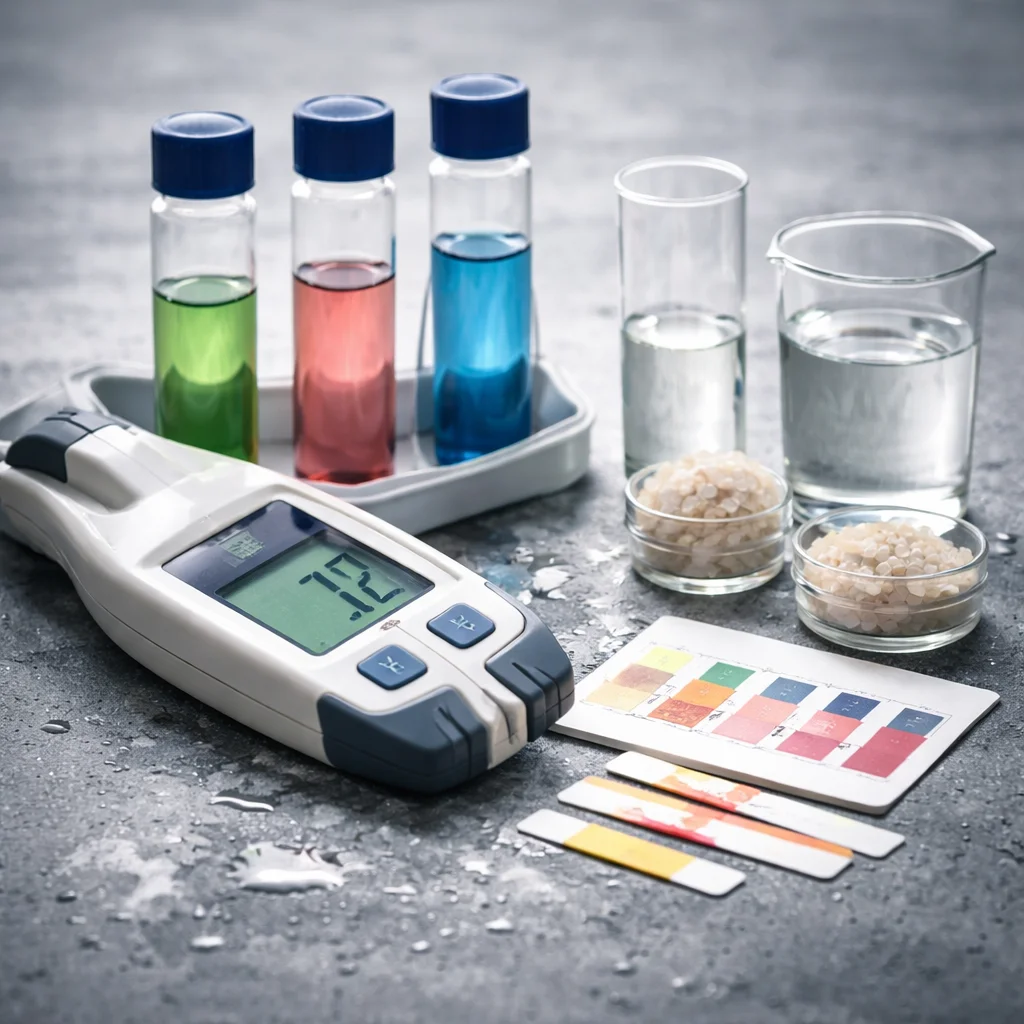
TDS Before and After
Total dissolved solids readings at the feed line and at the tap give us a before-and-after comparison. That number is the clearest objective measure of whether the system is doing its job.
Three Reasons RO Output Declines Over Time
Understanding the cause makes the fix straightforward.
Membrane Fouling
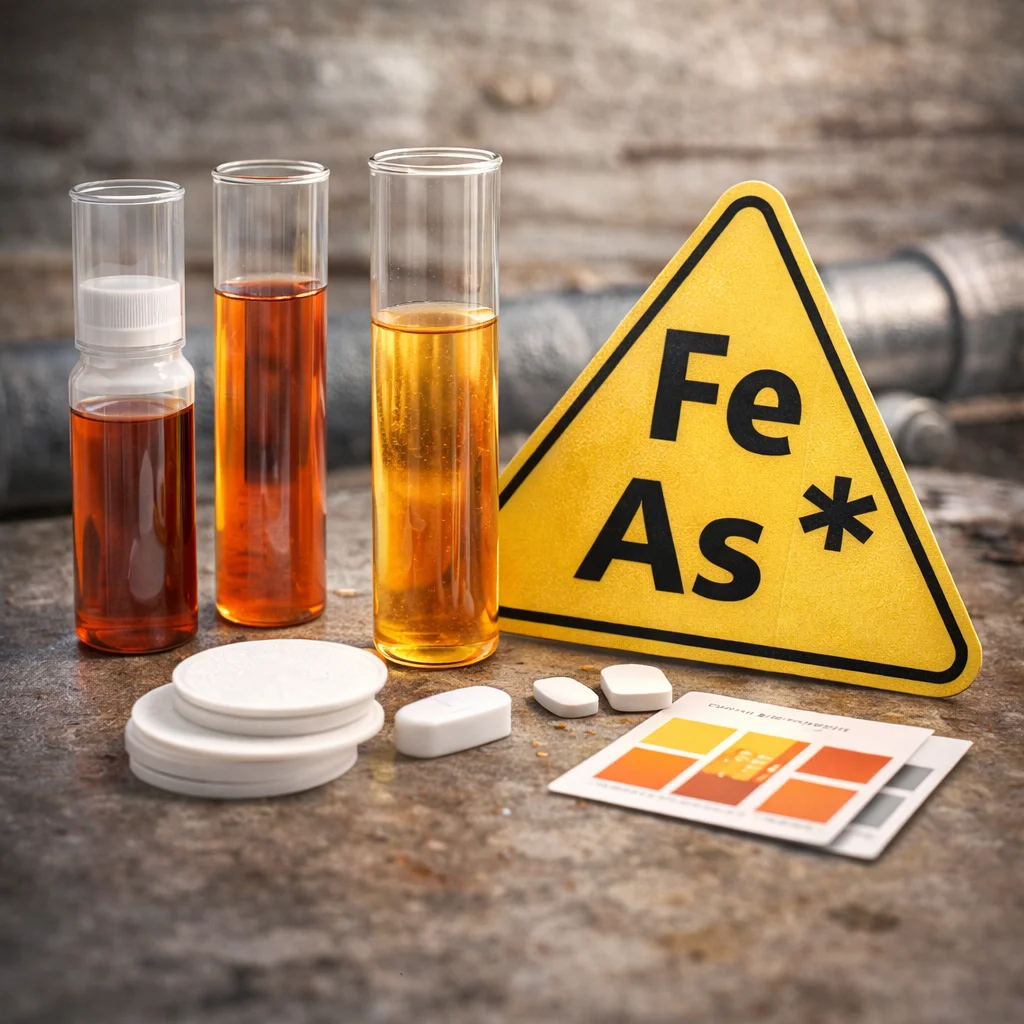
Iron, hardness, and organic matter accumulate on the membrane surface. Southeast Michigan well water is particularly hard on membranes that haven't had a water quality assessment upstream.
Filter Exhaustion
Pre-filters and post-filters have a service life measured in gallons, not years. A household that runs heavy water use can exhaust a filter in months. We track filter age and check actual condition, not just the calendar.
Pressure Drop
Feed water pressure below 40 PSI degrades membrane performance noticeably. A separate booster pump solves the problem cleanly, Judith James's system got exactly that upgrade, and the difference in flow rate and taste was immediate.
35 years of water treatment work in Southeast Michigan, done without subcontractors.
- BBB Accredited
- Verified business standing with the Better Business Bureau
- Authorized Charger Dealer
- Factory-certified on the components we install and test
- Certified Technicians
- Every visit is performed by trained, credentialed staff
- Factory-Direct Pricing
- American-made components without the big-box markup
Common Questions About RO Performance Testing
How do you test an RO filter's performance on-site?
Does an RO system need high water pressure to work correctly?
How do I calculate my RO system's recovery rate?
Is it safe to drink reverse osmosis water every day?
How often should an RO system be performance tested?
What's the difference between RO performance testing and a standard filter replacement?
Can you test a whole-house RO system the same way as an under-sink unit?
Does an RO system need high pressure to work correctly?
Can you test a whole-house or commercial RO system the same way?
What Customers Say
“Mr. Water Treatment, Holly, MI, did a complete and precise job replacing our water system. They explained the water system and why each part was necessary in everyday language which created trust and helped us make a well-informed purchase. They also improved the speed and taste of our RO water tap by suggesting a separate pump and minerals. We had them installed and we are very glad we did. Mr. Water Treatment, Holly, MI, staff are honest and dependable. They stand behind their work and are easy to work with. We are very pleased with our new water system, and we are happy to have met staff of Mr. Water Treatment, Holly, MI.”
“I can't say enough good things about Mr. Water! This was the second time I've used them, and both experiences have been outstanding. About a year ago, they came out to replace my iron filter. They arrived on time, were friendly, professional, and completed the work efficiently. What really earned my trust was their honesty. They could have easily tried to sell me a new water softener, but instead they told me my existing unit still had plenty of life left and recommended waiting until it actually needed to be replaced. That kind of integrity is hard to find these days.”
Get a Clear Answer on Your RO System
If your water doesn't taste right or your tap pressure has dropped, call before the problem gets worse.
Related
Next step
Tell us about the job
Your name, your number and what needs doing. A person from Mr. Water Treatment LLC gets back to you.
Rather talk now?(810) 254-0515