
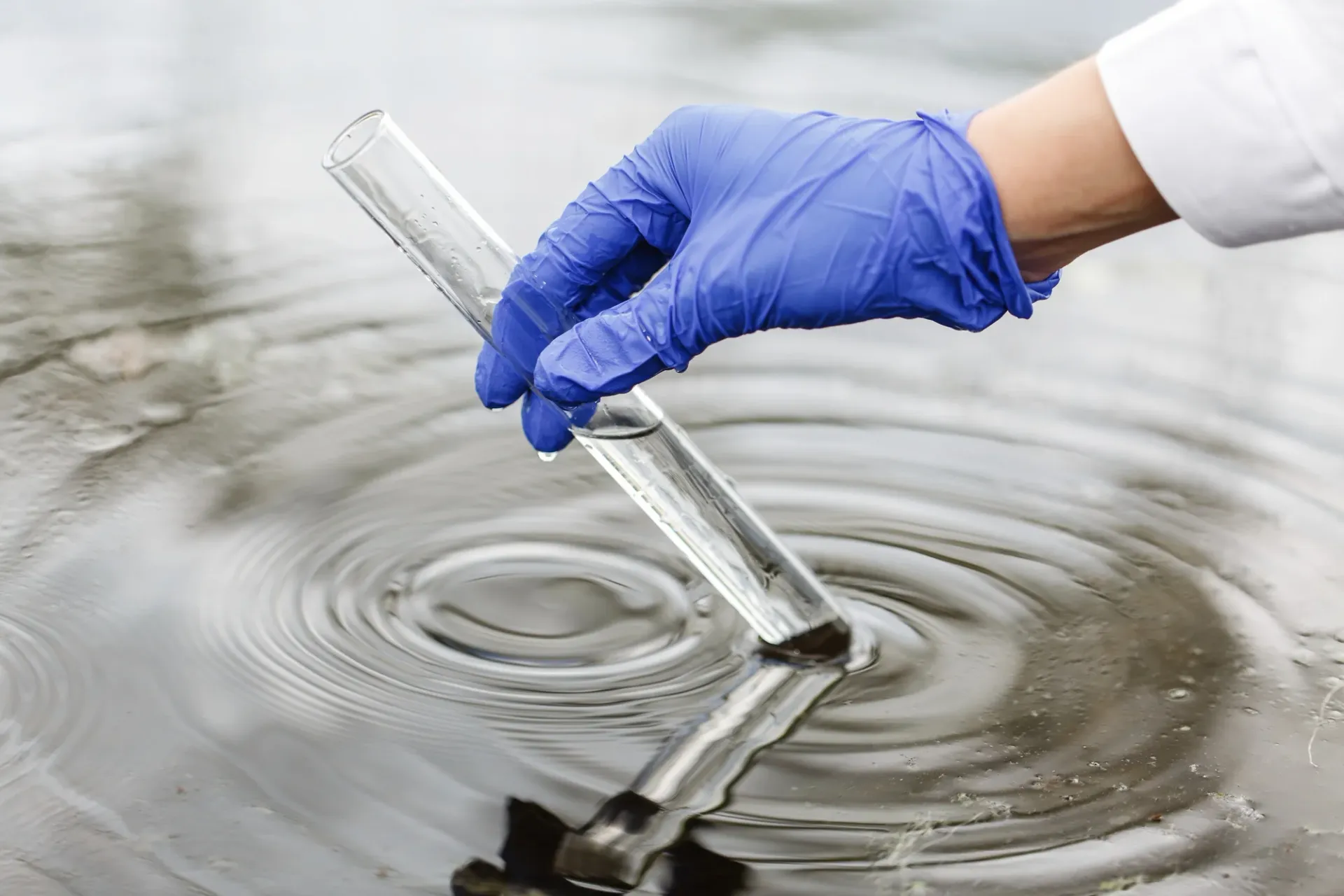
Free water testing Holly, MI (810) 254-0515
Water Mineral Content Testing in Holly

Holly Local

5.0 from 2 Google reviews

Water Mineral Content Testing in Holly

35 years of precise water analysis for Southeast Michigan homes and businesses.

Call or text (810) 254-0515

Request an estimate

Tell us what you need
No obligation


By submitting this form you agree that we may contact you about your request and share your name and email address with partner companies for email marketing. We never share your mobile number or text message consent with third parties or affiliates for marketing or promotional purposes.

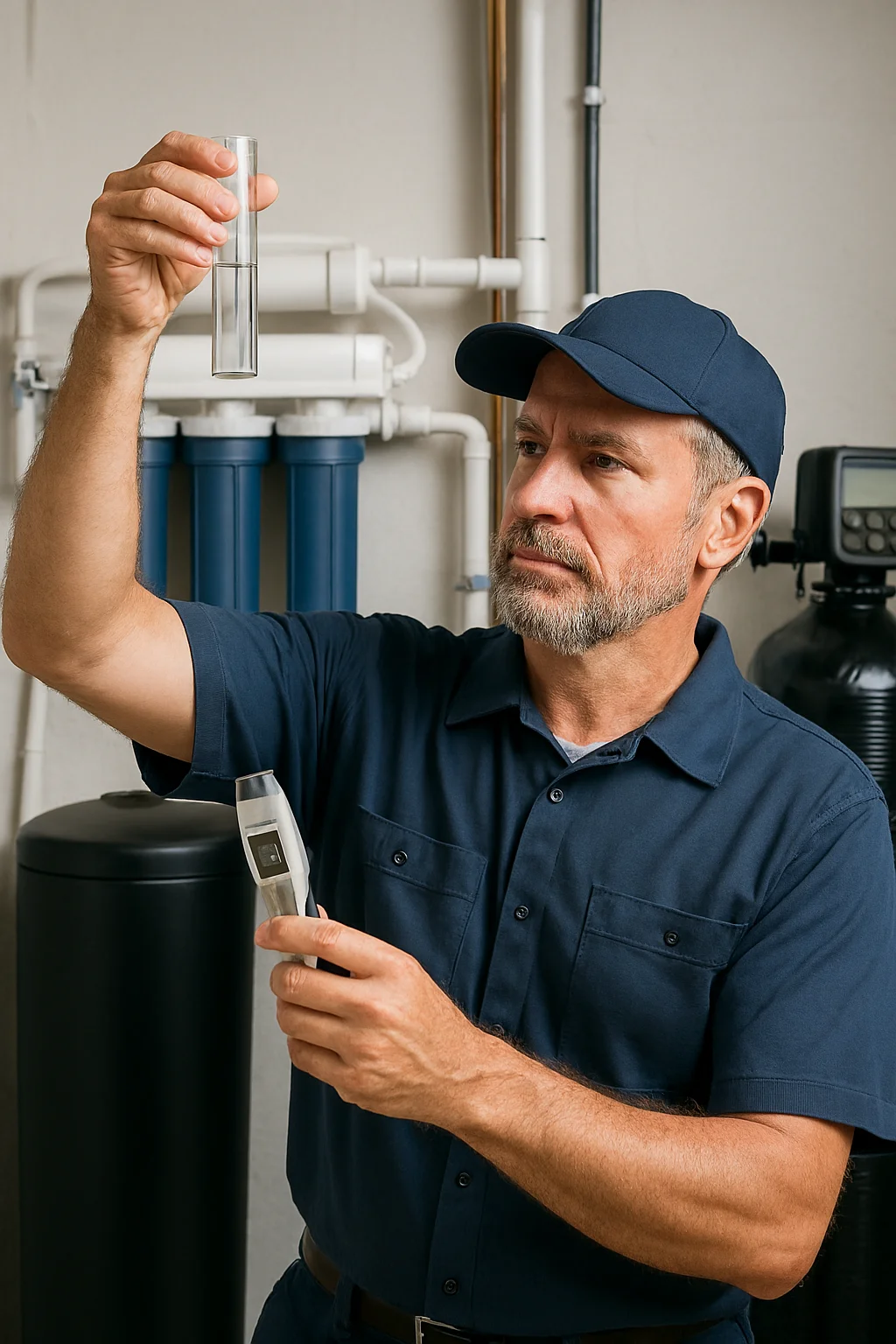
Water quality testing with a sample collection vial and digital meter in an indoor water treatment system installation.

What's Really in Your Holly Well Water

Water mineral content testing in Holly is what Mr. Water Treatment LLC has been doing for over 35 years, checking Southeast Michigan water for the specific minerals and contaminants that cause staining, odors, and equipment damage before recommending a single piece of equipment. If you're seeing orange staining in your sinks, a sulfur smell in the morning, or scale buildup on your fixtures, a standard mineral content test tells you exactly what you're dealing with. Call (810) 254-0515 and we'll walk you through what the results mean and what, if anything, needs to change.

The standard mineral content test covers pH, hardness, iron, manganese, sodium, nitrates, chlorine, TDS (Total Dissolved Solids), and tannins. That panel is broad enough to catch the most common problems in Oakland and Genesee County well water and specific enough to design a treatment system around, if one turns out to be necessary. What drives the scope of testing is your water source (well vs. municipal), any symptoms you're noticing, and whether you're on the same system as a business or running a dedicated commercial line. We don't recommend filtration or softening until the test results support it. Every job is different. Contact Mr. Water Treatment LLC for an accurate estimate.

What a Standard Mineral Content Test Covers

  • pH level, which affects corrosion risk in your plumbing and appliances
  • Hardness, measured in grains per gallon, the leading cause of scale buildup
  • Iron and manganese, the minerals behind rust staining and metallic taste
  • Sodium, relevant for softener efficiency and health considerations
  • Nitrates, a serious concern in agricultural well-water areas
  • Chlorine, checked for municipal water customers on treated supply
  • TDS (Total Dissolved Solids), a broad indicator of overall mineral load
  • Tannins, which cause yellow-brown discoloration common in Michigan well water
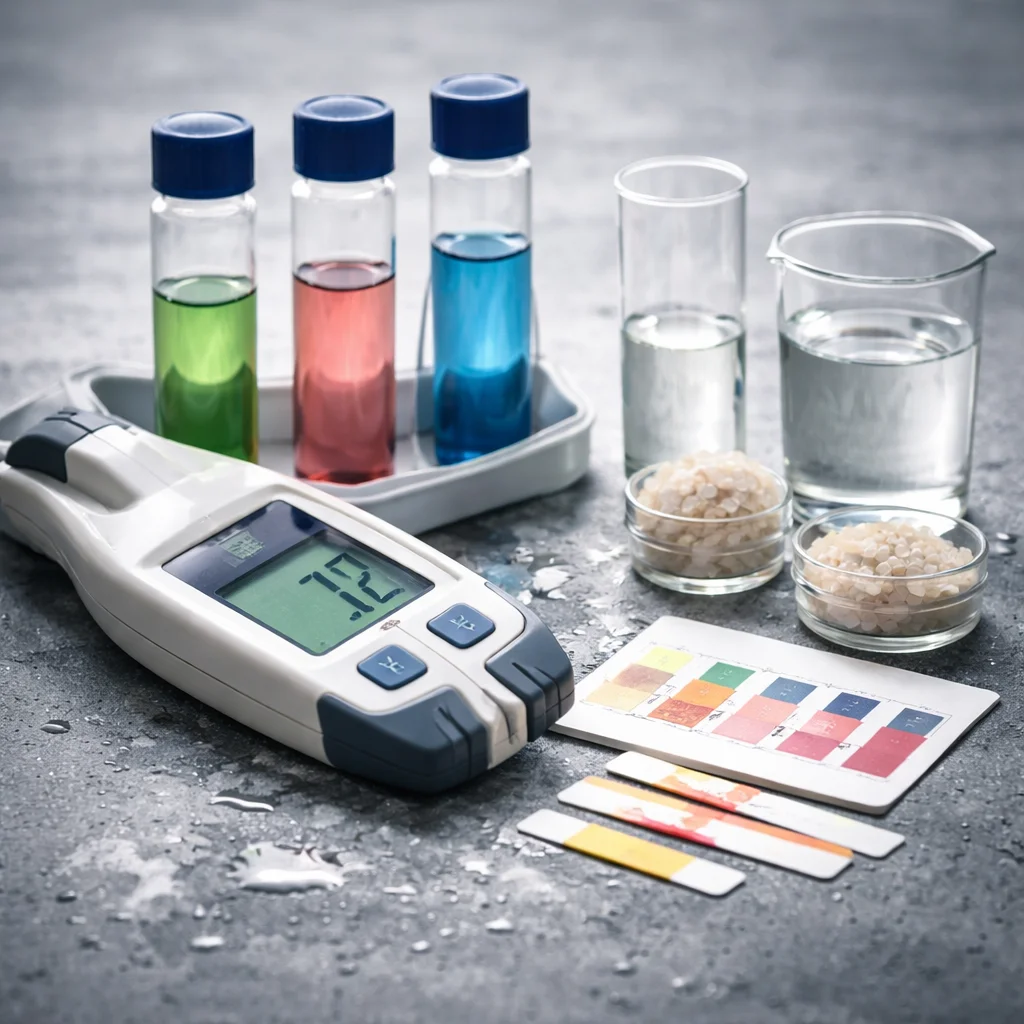
Water quality testing equipment including pH meter, test tubes with colored solutions, and chemical reagent samples in a laboratory setting.

Why It Matters

Signs Your Water Needs to Be Tested

These symptoms point to specific mineral problems, not vague "water quality" issues.

Orange or Rust-Colored Staining

Iron above 0.3 mg/L will stain sinks, tubs, and laundry. The shade tells you something, but only a test tells you the iron level and whether it's ferrous, ferric, or bacterial iron, because each type responds to a different treatment.
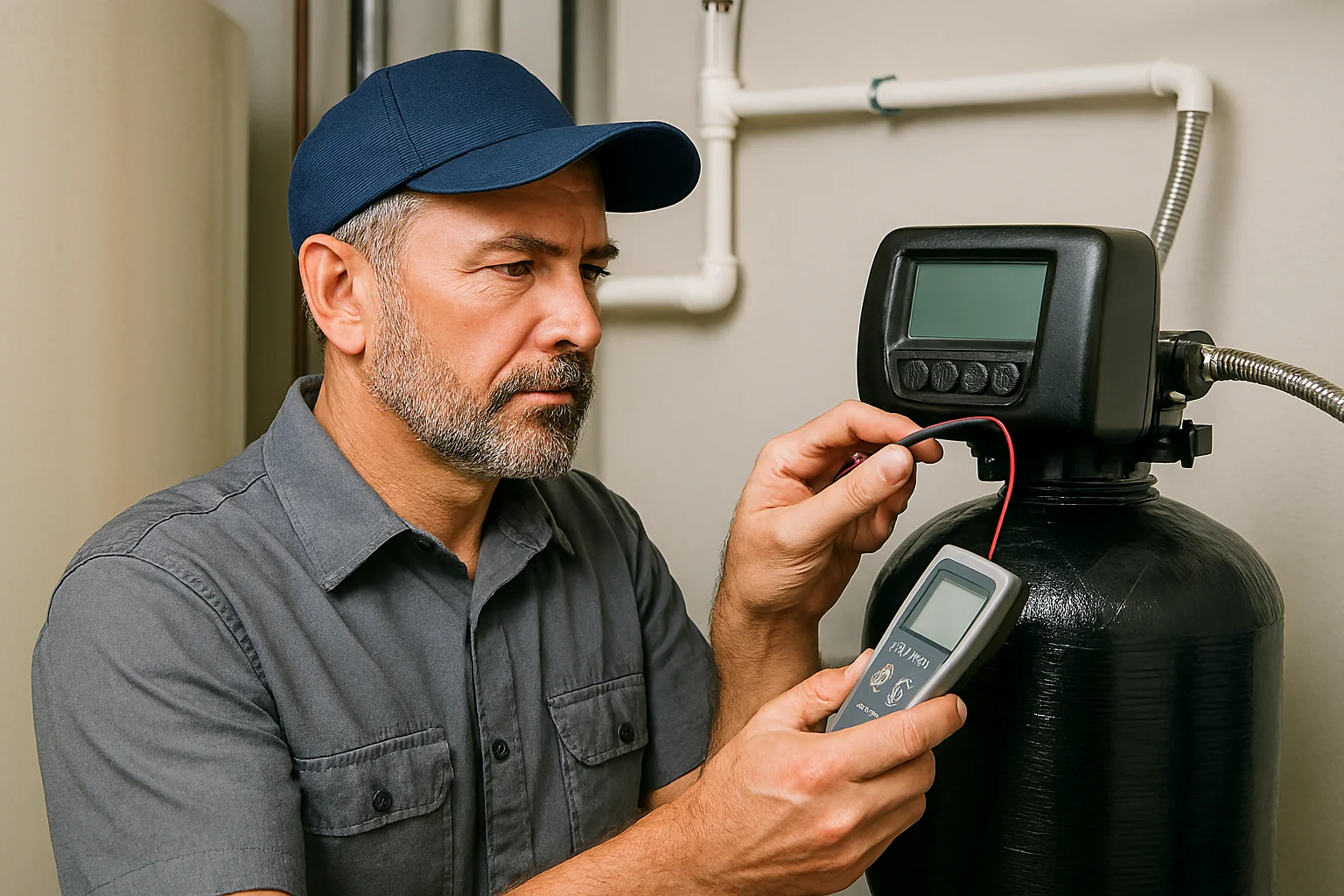
Water softener system monitoring and maintenance with digital display controls and testing equipment in a residential installation.

Scale Buildup on Fixtures

White or gray deposits on faucets and showerheads indicate high hardness. Southeast Michigan well water commonly runs 15 to 25 grains per gallon, well above the threshold where a softener pays for itself in appliance life.

Yellow or Brownish Tint

Tannins from decaying organic matter show up frequently in shallow wells across Oakland and Genesee Counties. They're not a health hazard but they affect taste and they indicate the well is drawing from near-surface water.

Sulfur or Rotten-Egg Odor

Usually hydrogen sulfide or manganese bacteria. The odor is unpleasant and the underlying mineral content often includes elevated manganese that testing will quantify precisely.

Existing System Not Performing

If your softener or iron filter isn't keeping up, the problem might not be the equipment, it might be a shift in your water chemistry. A water softener performance check starts with a fresh mineral content test to see what the system is actually handling now.

The Process

How Robert Tests and What Comes Next

On-Site Water Sample Collection

Robert collects water directly from your tap or well, pulling samples at the right points to capture an accurate reading, not a filtered or treated sample unless that's specifically what you want measured.

Full Panel Analysis

The sample is tested against the full standard mineral content panel: pH, hardness, iron, manganese, sodium, nitrates, chlorine, TDS, and tannins. Results are read precisely, not estimated.

Straight Talk on What the Numbers Mean

Robert explains every result in plain language and tells you what, if anything, needs to be addressed. If your existing system still has life left, he'll say so. Nick Demski's experience is a good example: they could've sold him a softener during his iron filter call. They didn't.

What a Good TDS Reading Actually Tells You
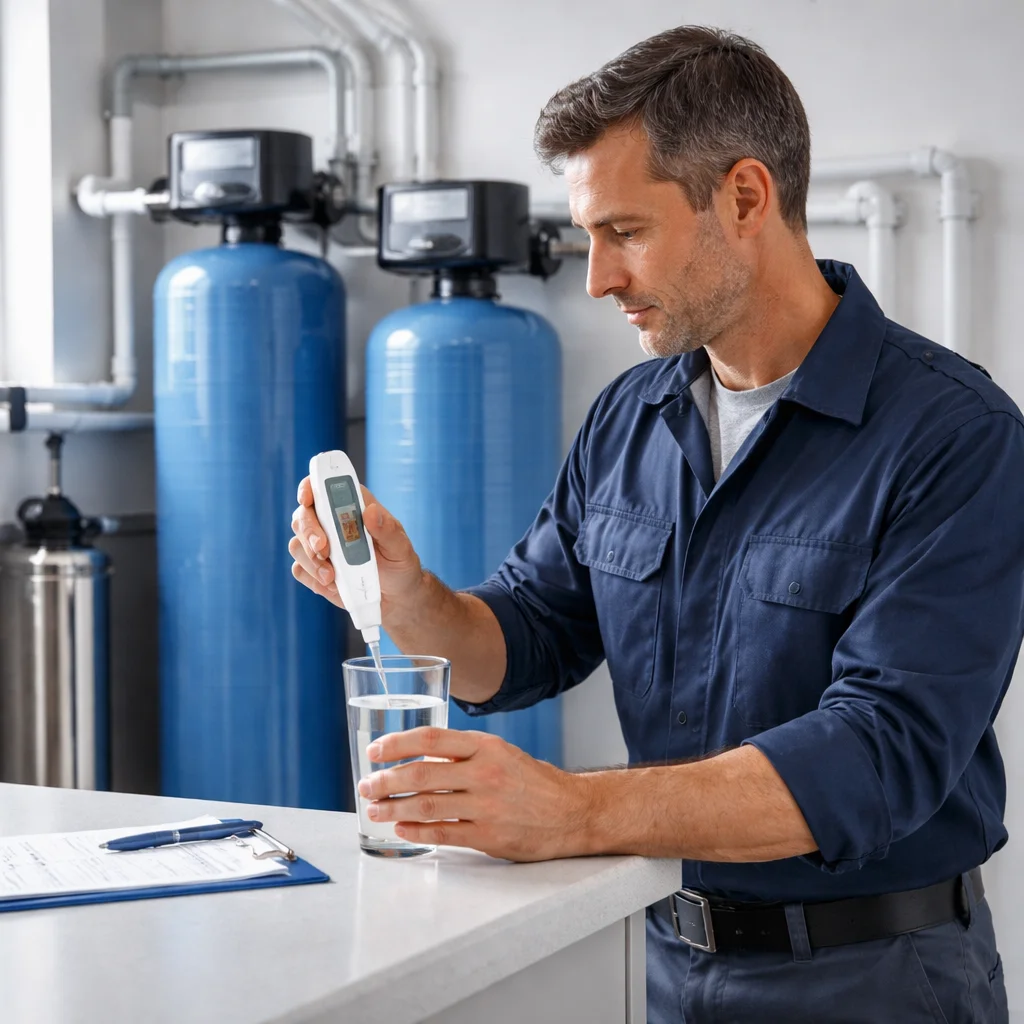
TDS (Total Dissolved Solids) is one of the most misunderstood readings in water testing. It's a measure of everything dissolved in your water: minerals, salts, metals, organic compounds. A higher TDS isn't automatically bad, and a lower TDS isn't automatically good. The acceptable range for drinking water runs up to 500 mg/L by EPA standards, but the right number for your household depends on what's making up that TDS. 200 mg/L of calcium and magnesium is a different problem than 200 mg/L that includes elevated nitrates or manganese. That's why we look at the full panel rather than a single-number pass-fail. Judith James noted that after their system replacement, we suggested adding a separate pump and minerals to their reverse osmosis tap to improve speed and taste. That recommendation came from understanding exactly what was in the water first. If you're in Fenton or Waterford and your water tastes flat or sharp, TDS in context of the full mineral panel is where the answer lives.
TDS meter testing a water sample from a residential water softening system in Holly, MI

Factory-Direct Testing, No Commission Incentive

Mr. Water Treatment runs every test before recommending anything. That's not a policy, it's how 35 years of honest service actually works.

BBB Accredited
Verifiable through the Better Business Bureau
Authorized Charger Dealer
Factory-direct systems, no retail markup
Certified technicians on every call
Robert doesn't subcontract the diagnostic work
5-star rated on Google
2 reviews, both customers who came back a second time

Common Questions About Water Mineral Testing

Don't see your question?(810) 254-0515
How do you test for minerals in water?
A water sample is collected from the tap or directly from the well and run against a panel of specific tests for each mineral or compound: hardness by titration, iron by colorimetric analysis, TDS by conductivity meter, pH by electrode, and so on. Each parameter needs its own method. A single-number TDS reading from a pocket meter tells you very little on its own; the full panel is what gives you actionable information.
What is a good TDS level for well water?
The EPA sets 500 mg/L as the secondary maximum for drinking water, but the number by itself doesn't tell the whole story. Well water in Southeast Michigan can test in the 300 to 600 mg/L range and still be safe depending on what's contributing to that number. High calcium and magnesium cause hardness problems; elevated nitrates or arsenic at any TDS level are a health concern. That's why we run the full mineral panel rather than a single-number screen.
How can you tell if well water is making you sick?
Symptoms like gastrointestinal issues, skin irritation, or metallic taste can point to specific contaminants, but they're not diagnostic on their own. Nitrates above 10 mg/L are the primary drinking water health concern in agricultural areas; arsenic is a longer-term issue common in certain Oakland County well-water zones. A water quality assessment that includes arsenic level testing alongside the standard mineral panel is the accurate way to find out what's actually in the water.
Does testing well water for minerals cover arsenic?
The standard mineral content panel tests pH, hardness, iron, manganese, sodium, nitrates, chlorine, TDS, and tannins. Arsenic requires a separate test. If you're on a well in rural Oakland or Genesee County, arsenic testing is worth adding; documented arsenic issues in Southeast Michigan well water make it a reasonable precaution rather than an edge case. We can run both during the same visit.
How often should you test your well water mineral content?
Annual testing is a reasonable baseline for well-water households. Beyond that, test any time you notice a change in taste, odor, or color; after a heavy rain season that could affect well integrity; after adding or servicing any treatment equipment; or if a neighbor's well test comes back with elevated contaminants. Municipal water customers have fewer variables but still benefit from testing if they're running a filter replacement cycle or noticing changes in taste or pressure.
What drives the cost of water mineral content testing?
The scope of the panel matters most: a standard mineral content screen costs less than a panel that adds arsenic, bacteria, or additional metals. Water source (well vs. municipal), distance within the service area, and whether you need a follow-up system needs analysis alongside the test all affect the total. Every job is different. Contact Mr. Water Treatment LLC for an accurate estimate.
What is a good TDS level for mineral water or well water?
The EPA sets 500 mg/L as the secondary maximum for drinking water, but the number by itself doesn't tell the whole story. Well water in Southeast Michigan can test in the 300 to 600 mg/L range and still be safe depending on what's contributing to that number. High calcium and magnesium cause hardness problems; elevated nitrates or arsenic at any TDS level are a health concern, which is why the full mineral panel matters more than the TDS figure alone.
Does a standard mineral content test include arsenic?
No. The standard panel tests pH, hardness, iron, manganese, sodium, nitrates, chlorine, TDS, and tannins. Arsenic requires a separate test. If you're on a well in rural Oakland or Genesee County, arsenic testing is worth adding at the same visit; documented arsenic issues in Southeast Michigan well water make it a reasonable precaution.
How often should a well-water household test its mineral content?
Annual testing is a reasonable baseline. Test sooner if you notice any change in taste, odor, or color; after heavy rainfall that could compromise well integrity; after servicing or replacing any treatment equipment; or if a neighbor's test returns elevated contaminants. Changes in your water's behavior between annual tests are always worth a call.

Get a Straight Answer on What's in Your Water

35 years of water testing in Southeast Michigan. Robert Davidson reads the results, explains them plainly, and tells you what the numbers actually require.

Related

Next step

Tell us about the job

Your name, your number and what needs doing. A person from Mr. Water Treatment LLC gets back to you.

Rather talk now?(810) 254-0515

No obligation


By submitting this form you agree that we may contact you about your request and share your name and email address with partner companies for email marketing. We never share your mobile number or text message consent with third parties or affiliates for marketing or promotional purposes.