
Holly Local
5.0 from 2 Google reviewsWater Softener Performance Check in Holly
Precision diagnostics from a family-owned team with 35 years in Southeast Michigan water treatment.
Call or text (810) 254-0515Request an estimate
Tell us what you need
What a Performance Check Actually Tests
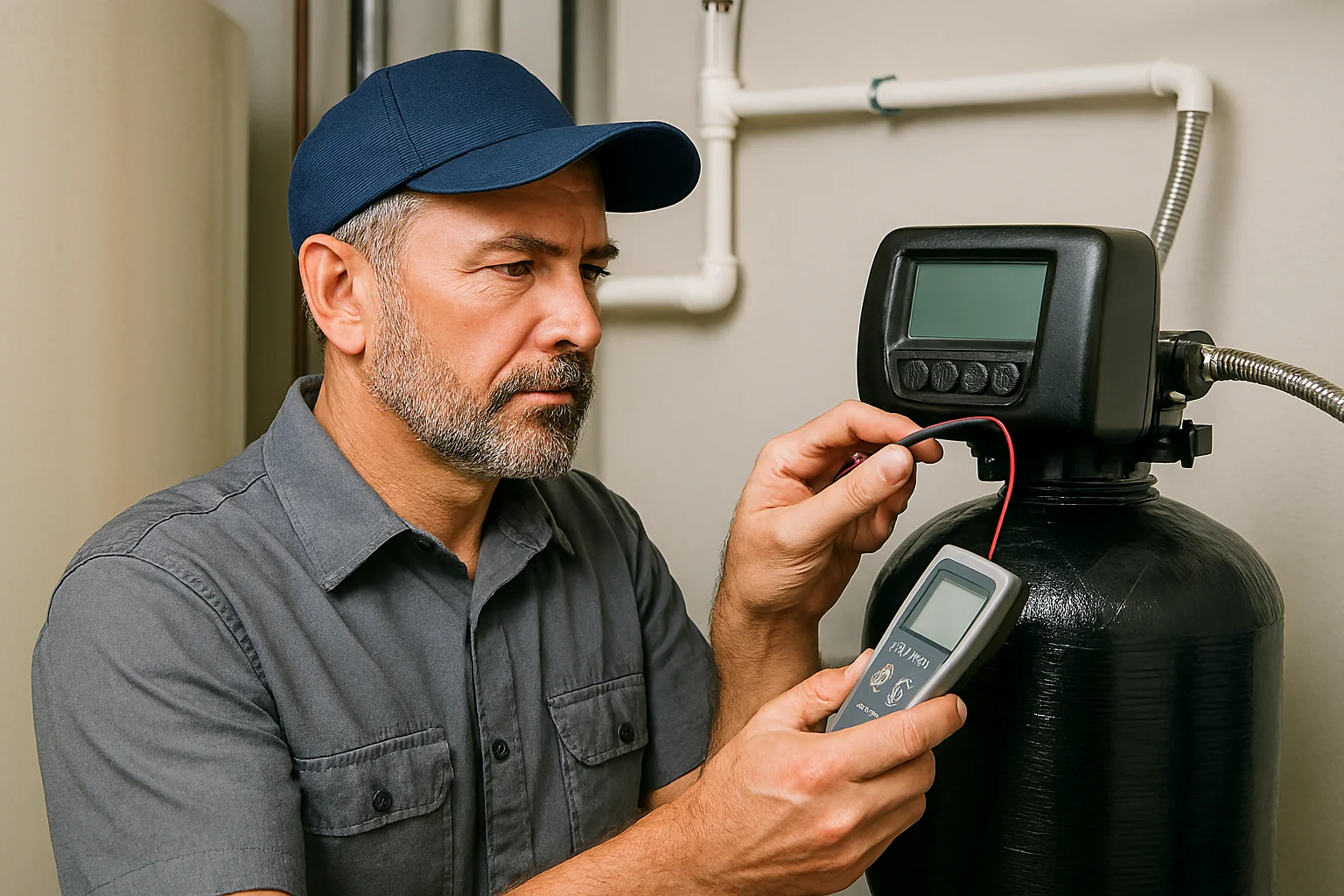
A water softener performance check in Holly, MI is a systematic diagnostic visit, not a glance at the salt level, and Mr. Water Treatment LLC has been running them on Southeast Michigan systems for over 35 years. Robert Davidson's team measures actual output hardness, inspects the control valve, checks resin condition, and reviews regeneration cycle efficiency so you know exactly how well your system is working before a small drift becomes a costly failure. If anything is off, we'll tell you plainly what it is and what it will take to fix it. Call (810) 254-0515 to schedule yours.
Holly and the surrounding townships sit on groundwater that runs hard, and municipal supply in this part of Oakland County carries mineral loads that push softeners to work harder than average. Over time, that means resin beds exhaust faster, brine tanks accumulate sediment, and control valve settings that were right at installation drift out of tune. A performance check accounts for all of that: we test the water coming out of your softener against what's going in, compare the numbers to your system's rated capacity, and adjust regeneration frequency and salt dose to match your actual household demand. We won't recommend a replacement if a tune-up is the right call. That's how we've operated since 1991, and it's exactly what a 5-star rating across both of our Google reviews reflects. Every job is different. Contact Mr. Water Treatment LLC for an accurate estimate.
What a Performance Check Covers
- Outlet hardness test, measures actual softened water vs. rated system capacity
- Control valve inspection and settings adjustment for your household's demand
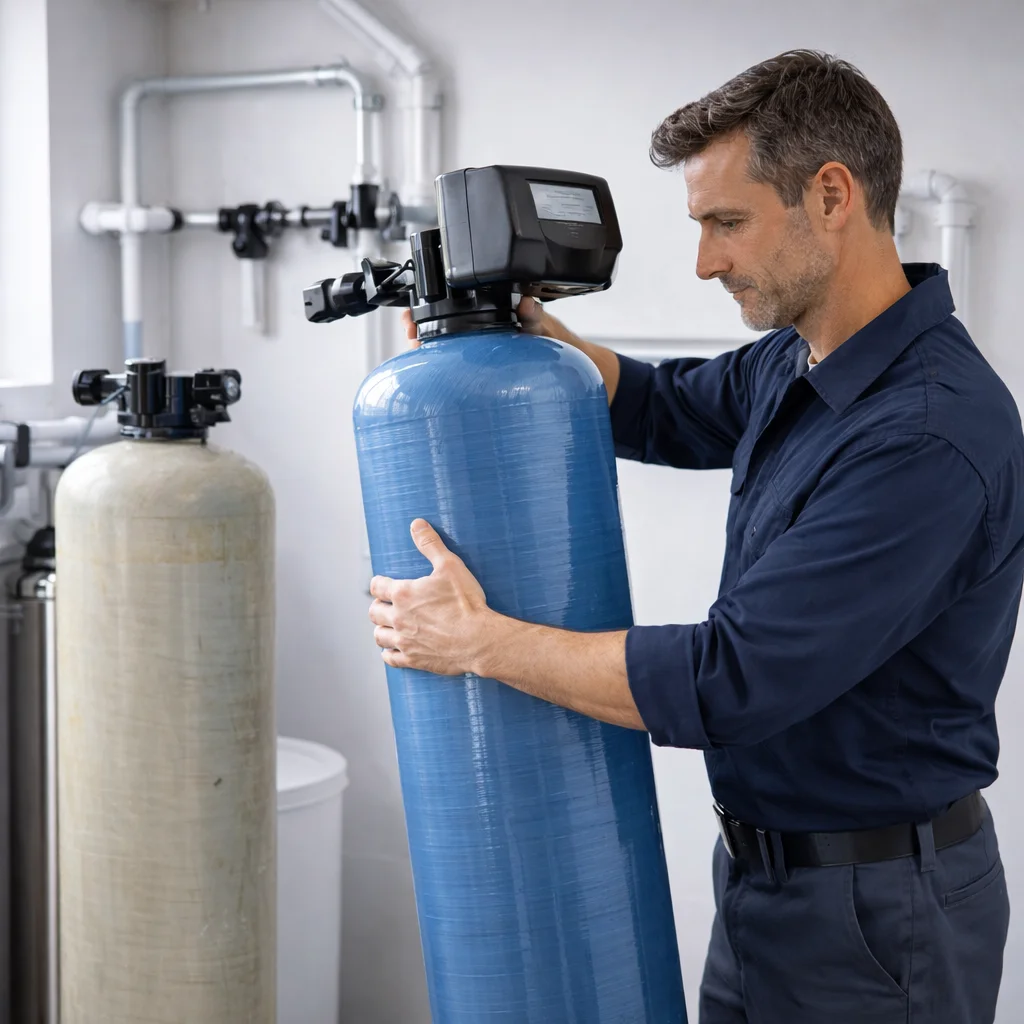
- Resin bed evaluation for exhaustion, channeling, or iron fouling
- Brine tank inspection for sediment buildup and mushing
- Regeneration cycle review, frequency, salt dose, and draw rate
What We Inspect
Five Systems That Affect Softener Efficiency
Each one of these can quietly cut your softener's output, we check all five on every visit.
Control Valve and Timer
The control valve directs every phase of the regeneration cycle. Worn seals, sticky pistons, or settings that haven't been updated since installation can cut regeneration efficiency dramatically. We inspect the valve mechanically and confirm the programming matches your current water use, not the defaults from five years ago.
Resin Bed Condition
Softening resin is what actually pulls hardness minerals from your water. It doesn't last forever, iron fouling and chlorine degradation break resin beads down over time. We test effluent hardness and assess whether the resin still has useful life or whether resin replacement is the more economical path.
Brine Tank and Salt Bridges
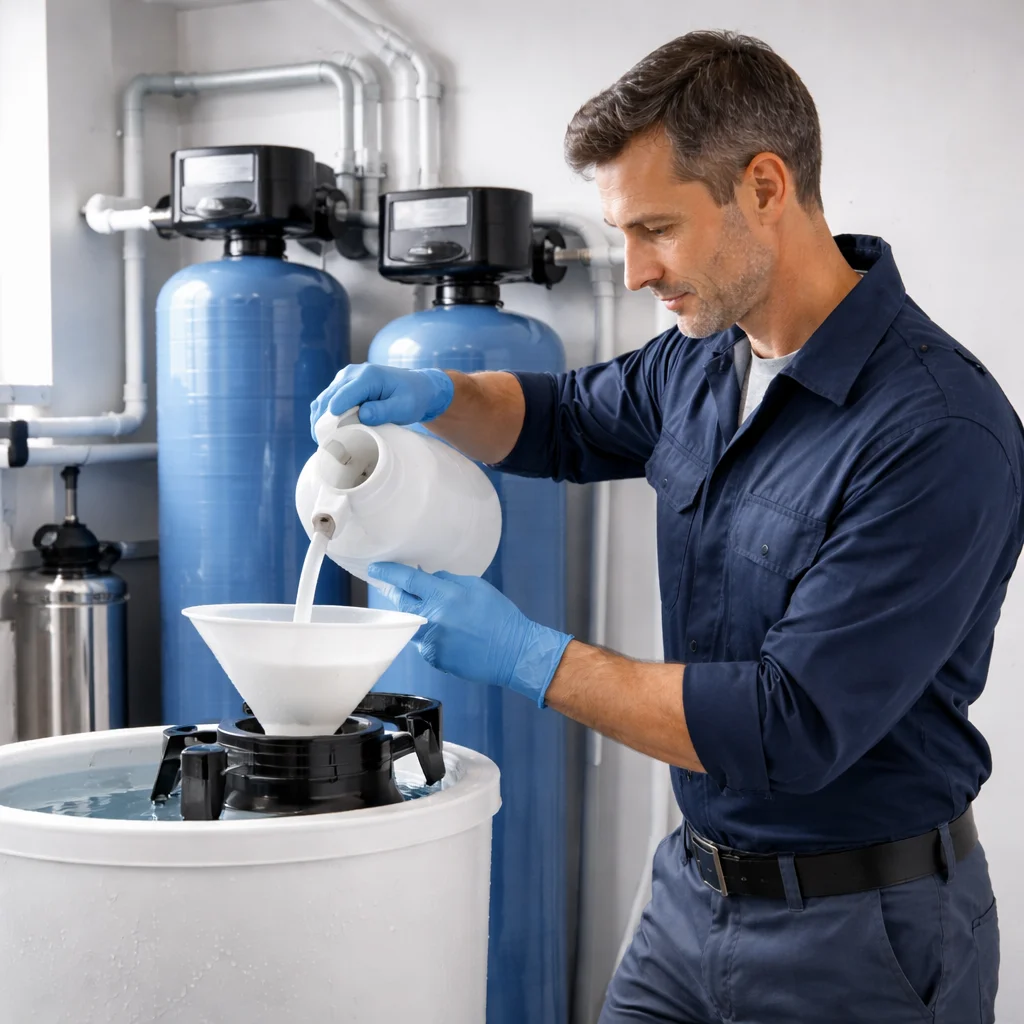
A crust of hardened salt above a hollow void, called a salt bridge, can fool the system into skipping regeneration entirely. Sediment at the bottom of the brine tank compounds the problem. We check for both, clean the tank if needed, and verify the brine draw line is clear.
Regeneration Frequency and Salt Dose
Metered softeners regenerate based on water volume used; time-based units run on a fixed clock. Neither setting should stay where it was set at install if your household size or water use has changed. We review and adjust both so your system isn't wasting salt on unnecessary cycles or under-regenerating and passing hard water.
Inlet and Outlet Water Quality
We test hardness at the softener inlet and outlet on the same visit. That comparison tells us exactly how much removal efficiency the system has lost. It's the most direct measure of whether a basic water quality test is worth running on your full supply to look for iron or other minerals competing with the resin.
Bypass Valve and Plumbing Connections
A partially open bypass valve or a weeping connection quietly lets hard water blend back into the softened supply. These are easy to miss without a systematic check. We inspect every connection point and verify the bypass is fully seated so hard water isn't sneaking in around your system.
Local Water Conditions
Why Holly's Water Makes Regular Checks Worth It
How a Performance Check Visit Works
Water Test First
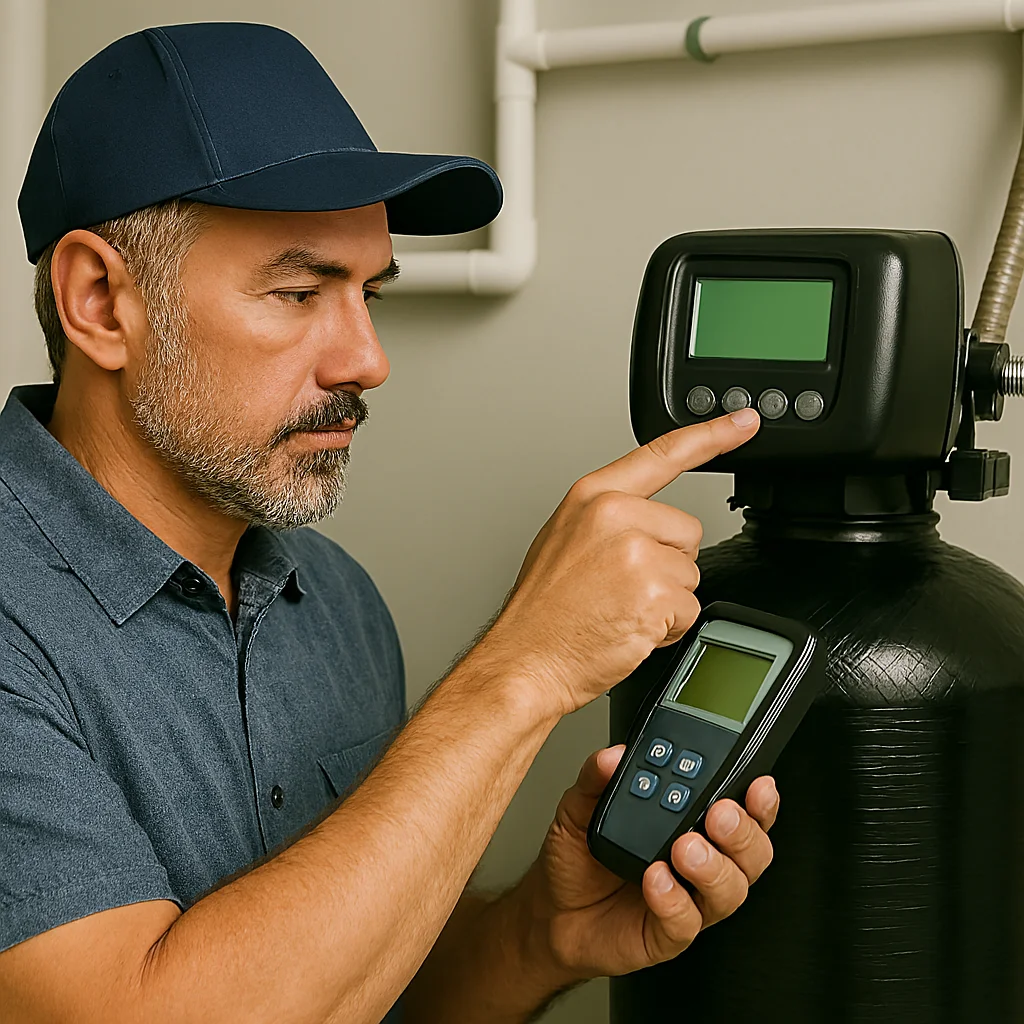
We test both the raw supply and softened output before touching any settings. The numbers tell us what's actually happening in your system, not what we assume.
Full System Inspection
Control valve, resin condition, brine tank, regeneration settings, bypass position, and plumbing connections, everything gets checked in sequence. Nothing is assumed good until it's confirmed.
Adjust, Clean, or Recommend
If a tune-up fixes it, we do it on the spot. If the resin is spent or a repair is warranted, we'll say so plainly and explain why, no upsell, no guessing.
The Mr. Water Treatment Difference
What sets a 35-year family operation apart from a franchise service call.
- Factory-direct pricing on American-made components
- No big-box markup. Systems built with Clack valves and domestic parts.
- Authorized Charger Dealer with certified technicians
- Credentials that matter when your system needs more than a glance.
- BBB accredited, family-owned since 1991
- Robert Davidson's name is on every job. That's not a franchise policy.
- Diagnosis before recommendation
- We test first. We won't suggest a replacement when an adjustment will do.
Common Questions About Softener Performance Checks
How do I know if my water softener is performing at full capacity?
What happens during a water softener performance check?
How often should I have my softener checked for performance issues?
What causes a water softener to lose performance over time?
How full should my water softener brine tank be?
What is the difference between a metered and time-based softener, and does it affect the check?
What is the difference between a metered and time-based softener for performance purposes?
How do I test my water softness at home between professional visits?
In the field
A look at our work
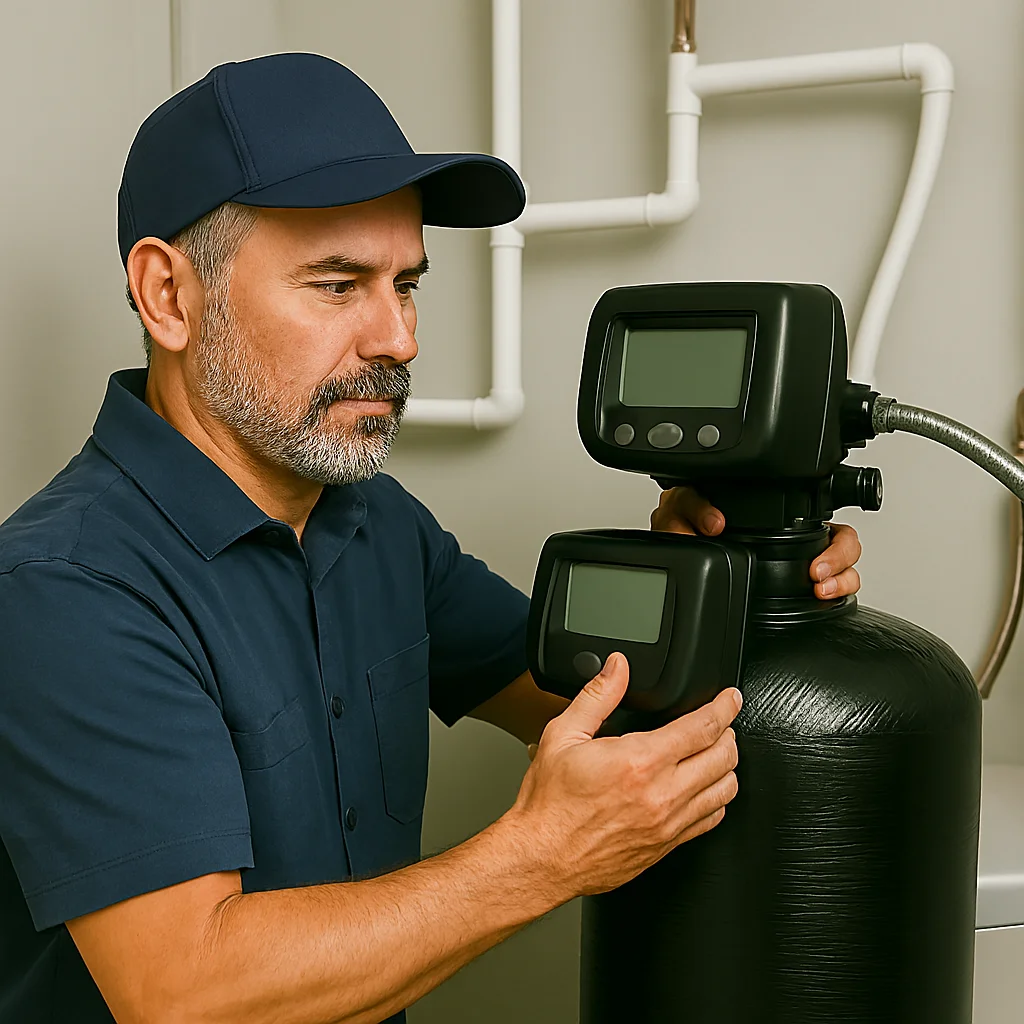
Schedule a Performance Check in Holly
If your water has started feeling different, your soap isn't lathering the way it used to, or you can't remember the last time anyone looked at your softener's settings, call Robert Davidson's team at Mr. Water Treatment LLC. We'll test the water, go through the system top to bottom, and give you a straight answer on what it needs. We don't sub out our work and we don't recommend a replacement when an adjustment will do. Call (810) 254-0515 or reach us at info@mrwatertreatmentllc.com.
Related
Next step
Tell us about the job
Your name, your number and what needs doing. A person from Mr. Water Treatment LLC gets back to you.
Rather talk now?(810) 254-0515